جولات بعروض خاصة
عرض المزيد
عرض المزيد
جولات بعروض خاصة
عرض المزيد
عرض المزيد
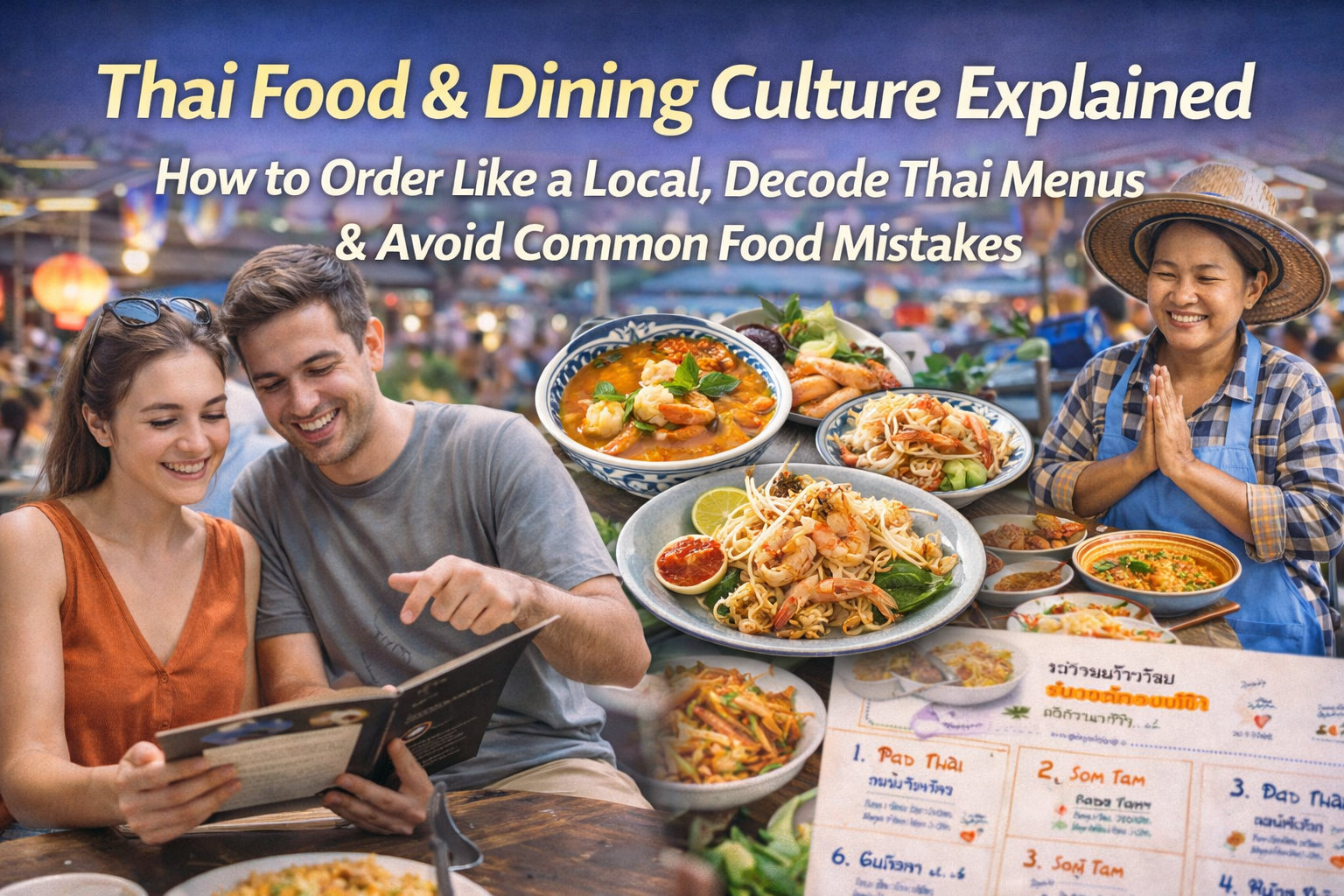
ثقافة الطعام وتناول الطعام التايلاندية مفسرة
العودة إلى المدونة
23 Jan 2026
477
كيفية الطلب مثل السكان المحليين، فك شفرة قوائم الطعام التايلاندية & تجنّب أخطاء الطعام الشائعة
الطعام التايلاندي ليس مجرد مذاق — إنه ثقافة وعادات وقواعد غير معلنة.
إذا كنت قد فعلت أيًا من التالي:
• أشرت إلى قائمة الطعام وأملت الأفضل
• طلبت شيئًا ظننت أنه شيء… لكنه وصل مختلفًا تمامًا
• قلت "ليس حارًا" ولا زلت تشك في قرارات حياتك
سيساعدك هذا الدليل على تناول الطعام التايلاندي مثل السكان المحليين — بثقة وراحة وصواب.
⸻
كيفية طلب الطعام التايلاندي مثل السكان المحليين (الطريقة الحقيقية)
لا يقدّم السكان المحليون شروحات طويلة عند الطلب.
ثقافة الطعام التايلاندي تقدر الوضوح والسرعة والأدب.
عبارات أساسية ستستخدمها فعلاً:
• "Ao…" = أريد…
• "Mai ao…" = لا أريد…
• "Mai sai…" = لا تضف…
• "Sai nit noi" = فقط قليلًا
• "Thammada" = عادي / طبيعي
مثال:
"Ao khao pad goong, mai ped loey, mai sai prik."
(أرز مقلي بالروبيان، ليس حارًا على الإطلاق، لا فلفل حار.)
بسيط، هادئ، ومحترم.
⸻
مستويات الحار في تايلاند موضحة
(نعم، "ليس حارًا" لا يزال حارًا)
هنا تتصادم التوقعات مع الواقع.
مقياس الحار التايلاندي (النسخة الصادقة):
• Mai ped – ليس حارًا (لا يزال له نكهة الفلفل)
• Ped nit noi – حار خفيف… بالنسبة للتايلانديين
• Ped klang – متوسط (حار جدًا لمعظم السياح)
• Ped mak – حار جدًا (للسكان المحليين فقط)
خدعة للبقاء محليًا 🌶️
قل:
• "Mai ped loey" (ليس حارًا على الإطلاق)
أو
• "Ped nid diao, farang gin" (قليل الحار، مستوى الأجانب)
حتى مع ذلك — قد يظهر الفلفل الشيطان. هذا طبيعي.
⸻
دليل فك شفرة قوائم الطعام التايلاندية
(ماذا تعني الكلمات فعلاً)
قد تبدو قوائم الطعام التايلاندية مخيفة، لكن بمجرد تعرفك على الأنماط، تصبح سهلة.
كلمات شائعة في القائمة يجب أن تعرفها:
• Pad – مقلي بالمقلاة
• Tom – مسلوق / حساء
• Gaeng – كاري
• Yum – سلطة حارة
• Nam tok – سلطة لحم حارة
• Khao – أرز
• Sen – نودلز
البروتينات:
• غاي – دجاج
• موو – لحم خنزير
• نوا – لحم بقري
• جونغ – جمبري
• بلا – سمك
بمجرد أن تعرف هذا، تتوقف القوائم عن أن تكون مخيفة.
⸻
الأطباق التايلاندية الشائعة التي يسيء السائحون فهمها
بعض الأطباق التايلاندية مشهورة — لكنها غالبًا ما تُساء فهمها.
🍜 باد تاي
يتوقع السياح حلاوة قوية.
يتوقع السكان المحليون توازنًا: حامض، مالح، حلو بعض الشيء.
باد تاي في الشارع غالبًا أقل حلاوة من نسخ المطاعم.
⸻
🍲 توم يام
الكثير يتوقعونه كريميًا.
توم يام الكلاسيكي صافٍ وحامض وحار.
إذا أردت كريميًا، ابحث عن توم يام نام خون.
⸻
🥗 سوم تام
يعتقد الناس أنه سلطة خفيفة.
هو في الواقع حار جدًا ولاذع بالافتراضي.
حدد مستوى الحار دائمًا.
⸻
🍛 الكاري الأخضر
يتوقع السياح نكهة جوز هند خفيفة.
الكاري الأخضر التايلاندي غني بالأعشاب وحار، ليس حلوًا.
⸻
🍖 لارب
غالبًا ما يخطئ الناس باعتباره طبقًا من اللحم.
إنه سلطة لحم مفروم حارة، تؤكل مع الأرز.
نذهب النكهة، حار جدًا.
⸻
آداب طعام الشارع في تايلاند
طعام الشارع مريح — لكنه لا يزال يتطلب الأدب.
افعل:
• راقب قبل الطلب
• اصطف بهدوء
• كل بكفاءة
• أعد الأطباق إذا فعل الآخرون
لا تفعل:
• المساومة على الطعام
• طلب تخصيص مبالغ فيه
• الجلوس لفترة طويلة بعد الأكل
طعام الشارع يدور حول الانسيابية والاحترام.
⸻
لماذا تُشترك الوجبات التايلاندية (وكيف تأكل بشكل صحيح)
الوجبات التايلاندية جماعية بطبيعتها.
في المطاعم المحلية:
• توضع الأطباق في الوسط
• يشارك الجميع
• الأرز شخصي
الطريقة الصحيحة للأكل:
• تناول كميات صغيرة
• استخدم ملاعق التقديم
• لا تتسرع في أخذ أفضل قطعة
• أعد ملء الأرز بحرية
هذا يظهر الوعي — شيء يقدره التايلانديون بشدة.
⸻
صدمة ثقافية: تناول الطعام التايلاندي ليس منظمًا
لا تتوقع:
• أطباق متعددة المراحل
• أن يأكل الجميع في نفس الوقت
• ترتيب صارم
يصل الطعام عندما يكون جاهزًا.
المحادثة أهم من التوقيت.
⸻
أخطاء غذائية شائعة يرتكبها السياح
• طلب طبق واحد لكل شخص
• استخدام الشوكة بدلًا من الملعقة
• التقليل من تقدير الحدة
• إهدار الطعام
💡 في تايلاند:
الملعقة = الأداة الرئيسية
الشوكة = مساعدة
⸻
كُلْ باحترام، لا بالخوف
ثقافة الطعام التايلاندية متساهلة.
لا تحتاج إلى نطق مثالي.
لا تحتاج إلى معرفة كل طبق.
كل ما تحتاجه الفضول والاحترام.
كُل ببطء.
شارك بسخاء.
اضحك من الحدة.
هكذا يفعلها المحليون.