جولات بعروض خاصة
عرض المزيد
عرض المزيد
جولات بعروض خاصة
عرض المزيد
عرض المزيد
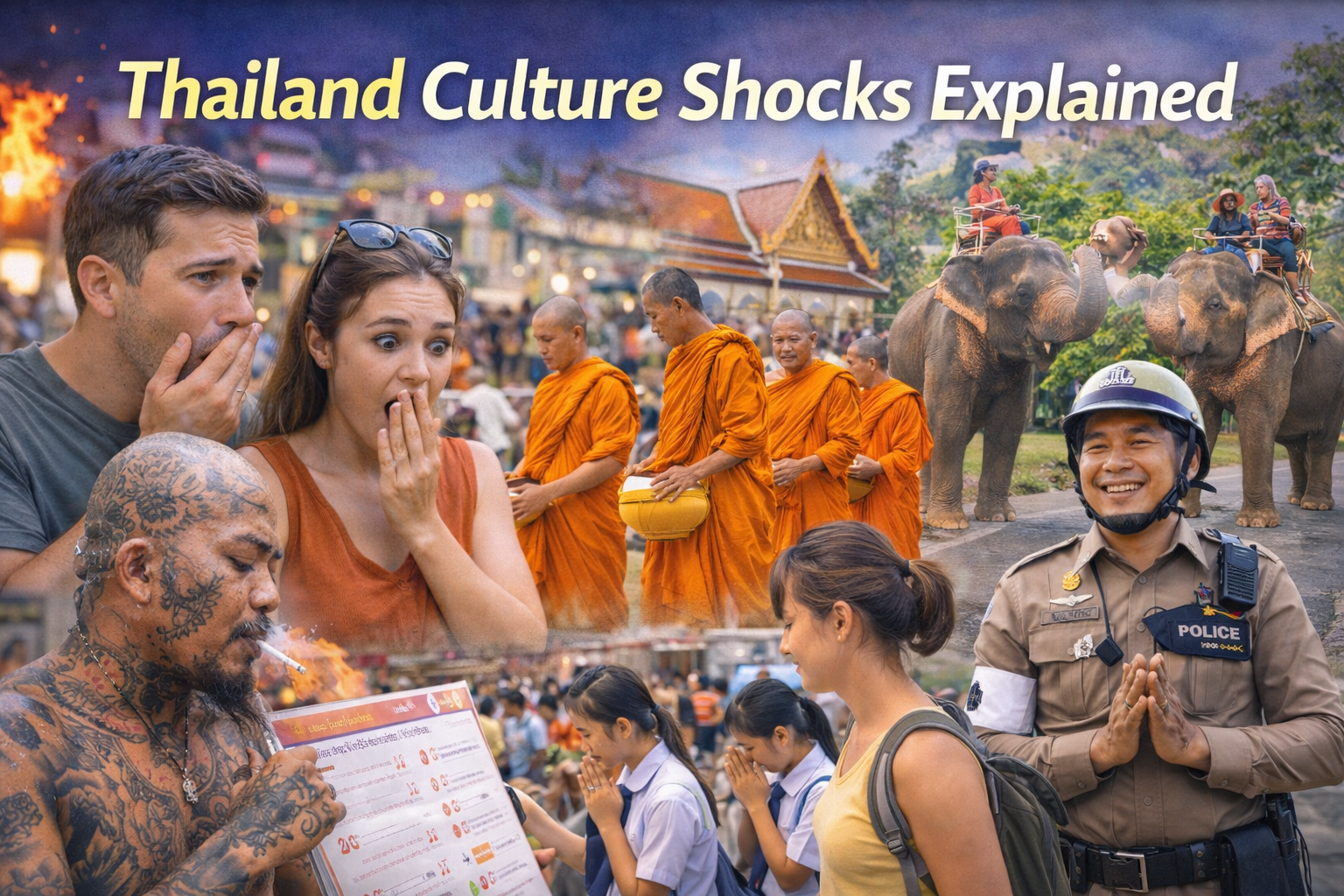
صدمات ثقافية في تايلاند مفسرة
العودة إلى المدونة
23 Jan 2026
512
ما يشعر به السائحون بأنه غريب، وما هو طبيعي فعلاً — ولماذا يشعر الناس بالأمان في تايلاند
تايلاند هي إحدى تلك البلدان حيث يقول العديد من المسافرين نفس الشيء:
"شعرت بالأمان… لكن أيضاً بالحيرة."
الأمور تبدو هادئة. الناس يبتسمون. لا يبدو شيء عدائياً.
ومع ذلك أحياناً تترك المكان متسائلاً:
• هل أزعجت أحداً؟
• لماذا لم يقولوا لا؟
• لماذا يبدو كل شيء مسترخياً… ولكنه ليس مهملًا؟
تشرح هذه الدليل صدمات الثقافة التي يواجهها السياح في تايلاند، والأشياء التي تبدو فظة (لكنها ليست كذلك)، ولماذا يشعر الناس بالأمان في تايلاند — بالإضافة إلى الحالات التي لا بد أن تكون فيها حذراً.
لا قوالب نمطية. لا كليشيهات سفر. مجرد تفسيرات حقيقية.
⸻
صدمات الثقافة التي يختبرها السياح في تايلاند
(لكن السكان المحليين يجدونها طبيعية تماماً)
1. نادراً ما يقول الناس "لا" بشكل مباشر
واحدة من أكبر المفاجآت.
بدلاً من "لا"، ستسمع:
• "ربما"
• "لاحقاً"
• "دعني أتحقق"
• ابتسامة وصمت
هذا ليس عدم صدق.
إنه يتعلق بتجنب المواجهة والحفاظ على الانسجام.
في الثقافة التايلاندية، قد يشعر قول "لا" مباشرة بعدم الراحة أو بأنه غير مهذب.
⸻
2. الابتسامة لا تعني دائماً السعادة
تايلاند مشهورة بابتساماتها — لكن ليست كل الابتسامات تعني الشيء نفسه.
يمكن أن تعني الابتسامة:
• الأدب
• الإحراج
• الاعتذار
• الانزعاج
• تهدئة الوضع
غالباً ما تُستخدم الابتسامة للحفاظ على سلاسة المواقف، لا للتعبير عن العاطفة.
⸻
3. الأمور تتحرك ببطء أكثر — ولا يبدو أحد متوتراً
المواعيد النهائية تبدو مرنة.
العمليات تبدو مريحة.
لا يسرع أحد… حتى عندما تتأخر.
هذا مرتبط بعقلية تايلاند "سَباي سَباي" — البقاء هادئاً ومريحاً.
يُنظر إلى التوتر على أنه غير ضروري، وليس إنتاجياً.
⸻
4. إظهار الغضب علناً نادر
رفع الصوت، الجدال بصخب، أو إظهار الإحباط علناً يشعر السكان المحليين بعدم الراحة الشديد.
الحفاظ على السيطرة = النضج.
فقدان السيطرة = الإحراج.
حتى عندما يحدث خطأ ما، يُحترم الهدوء أكثر بكثير من "أن تكون على حق".
⸻
5. الهرمية موجودة — بهدوء
العمر، واللقب الوظيفي، والأدوار الاجتماعية مهمة في تايلاند، لكنها غير مُعلنة.
ستلاحظ:
• الأشخاص الأصغر سنًا أكثر تحفظًا
• مجاملة إضافية تجاه الكبار
• الموظفون شديدو الاحترام
هذا ليس خوفًا — إنه بنية ثقافية.
⸻
أشياء تبدو وقحة في تايلاند
(ولكنها ليست كذلك في الوطن — والعكس صحيح)
ما يفعله السياح غالبًا (غير مهذب عن غير قصد)
🚫 لمس رأس شخص ما
يُعتبر الرأس أقدس جزء في الجسد.
حتى الإيماءات الودية — خاصة تجاه الأطفال — قد تكون غير مريحة.
⸻
🚫 توجيه القدمين نحو أشخاص أو أشياء
تُعتبر القدمان أدنى جزء في الجسم.
توجيههما نحو:
• الأشخاص
• تماثيل بوذا
• الأشياء المقدسة
…غير محترم.
⸻
🚫 كونك صريحًا أو صاخبًا جدًا
في العديد من الثقافات الغربية، الصراحة = الصدق.
في تايلاند، قد يبدو ذلك:
• عدوانيًا
• محرجًا
• مزعجًا
يفضل النعومة على الصراحة الفجة.
⸻
أشياء يشعر بها السياح على أنها وقحة (ولكنها ليست كذلك)
😶 عدم التواصل البصري
قد يكون تجنب التواصل البصري علامة احترام، وليس تجنبًا.
⸻
😶 ردود قصيرة أو صمت
الصمت لا يعني عدم الاهتمام — قد يعني المجاملة أو التفكير.
⸻
😶 عدم قول "آسف" مباشرة
قد تُعرَض الاعتذارات من خلال الأفعال أو الابتسامات أو النبرة — وليس دائمًا الكلمات.
⸻
صدمة ثقافية: لماذا تبدو تايلاند آمنة جدًا
كثير من المسافرين يقولون إن تايلاند تبدو أكثر أمانًا من بلادهم — حتى في وقت متأخر من الليل.
لماذا؟
1. ثقافة منخفضة المواجهة
يتجنب الناس الصراع بنشاط.
يُثنى على العدوان اجتماعيًا.
⸻
2. وعي مجتمعي قوي
يلحظ السكان المحليون عندما يشعر شيء ما بأنه "غير طبيعي".
غالبًا ما يُراقب السياح بهدوء — خاصة في المدن الصغيرة.
⸻
3. احترام المساحة الشخصية
التحرش، وخاصة اللفظي أو الجسدي، نادر نسبيًا مقارنة بالعديد من الأماكن.
⸻
4. السياحة جزء من الحياة اليومية
تايلاند معتادة على الأجانب.
الارتباك، والأخطاء، والزلات الثقافية متوقعة — وغالبًا ما تُغتفر.
⸻
لكن... عندما لا يزال عليك أن تكون حذرًا
الإحساس بالأمان لا يعني أنه لا يمكن أن يحدث شيء.
مخاطر حقيقية في تايلاند:
• حوادث السكوتر
• حوادث متعلقة بالكحول
• الثقة الزائدة في المناطق "الآمنة"
• عمليات احتيال (غالبًا غير عنيفة)
معظم المشاكل تنجم عن انخفاض مستوى الوعي، وليس عن الخطر نفسه.
⸻
مناطق يجب التنبه فيها بشكل خاص:
• مناطق الحفلات في وقت متأخر من الليل
• الطرق وحركة المرور
• أماكن الاحتيال المكتظة بالسياح
• حالات الإيجار
تايلاند تبدو لطيفة — لكن الفيزياء والقوانين لا تزال سارية.
⸻
الأخطاء السياحية الشائعة المتعلقة بالثقافة
• افتراض أن الابتسامات تعني الموافقة
• الاعتقاد أن "الرخص" يعني عدم المسؤولية
• معاملة تايلاند كمنتزه ترفيهي
• تجاهل النصائح المحلية
تايلاند مضيافة — وليست مهملة.
⸻
كيفية التأقلم بسهولة (بدون التفكير المفرط)
لا تحتاج إلى إتقان الثقافة التايلاندية.
تذكر فقط:
• ابق هادئًا
• كن مراقبًا
• تجنّب المواجهة
• احترم المساحة والتدرج الهرمي
• ابتسم — لكن اقرأ الموقف
الجهد أهم من الكمال.
⸻
فهم تايلاند بما يتجاوز السطح
تايلاند تبدو سهلة — وهذا بالضبط سبب حدوث سوء الفهم.
بمجرد أن تفهم:
• لماذا يتصرف الناس كما يفعلون
• ماذا يعني الأدب حقًا هنا
• لماذا يشعر الأمان طبيعيًا، وليس مفروضًا
تصبح السفر أكثر سلاسة وعمقًا ومعنى.
تايلاند لا تطلب منك أن تغير من تكون —
فقط أن تبطئ وتكون واعيًا.