Özel Fırsat Turları
Daha Fazla Gör
Daha Fazla Gör
Özel Fırsat Turları
Daha Fazla Gör
Daha Fazla Gör
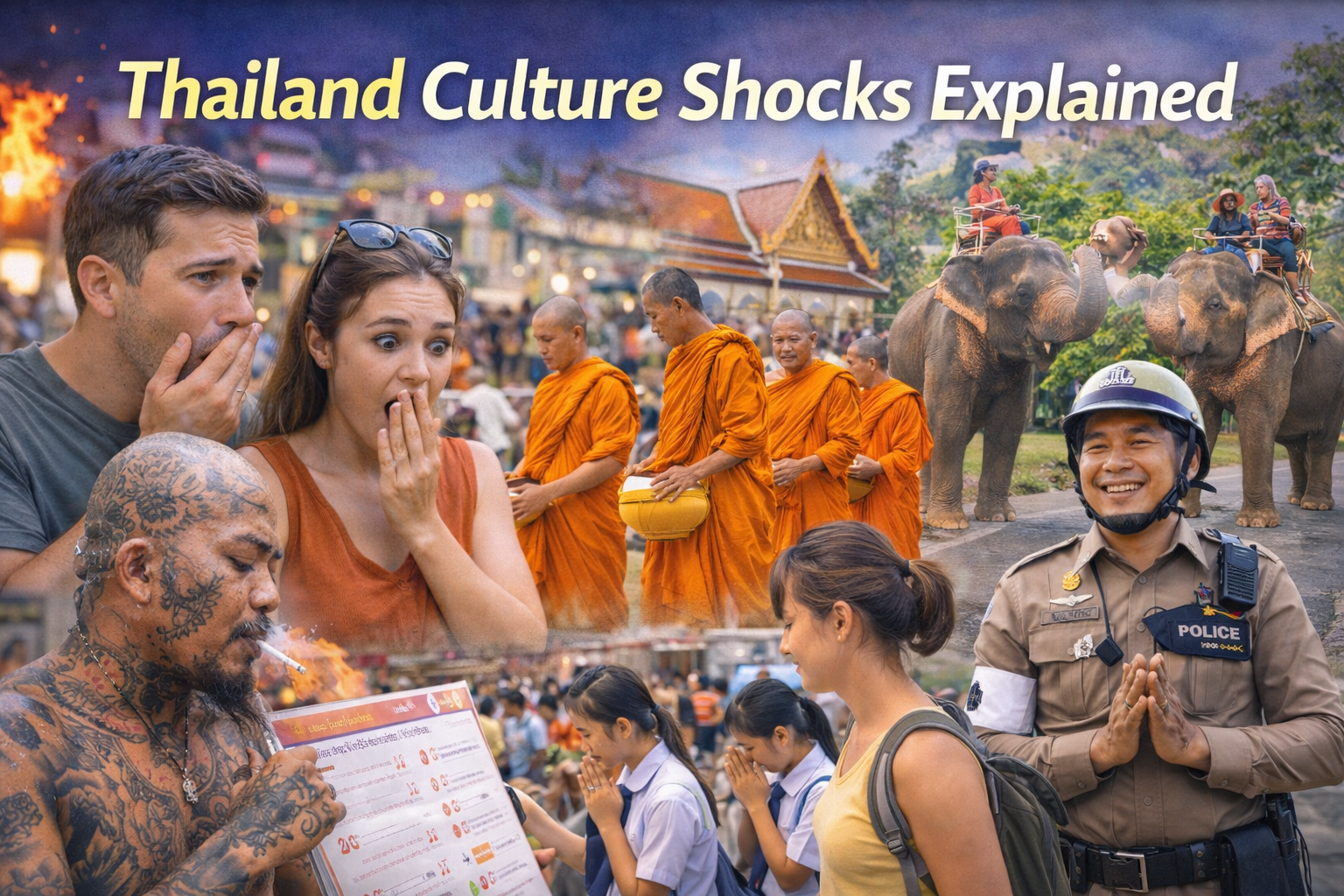
Thailand Culture Shocks Explained
Bloga geri dön
23 Jan 2026
635
What Feels Strange to Tourists, What’s Actually Normal — and Why Thailand Feels So Safe
Thailand is one of those countries where many travelers say the same thing:
“I felt safe… but also confused.”
Things feel calm. People smile. Nothing seems aggressive.
Yet sometimes you walk away wondering:
• Did I offend someone?
• Why didn’t they say no?
• Why does everything feel relaxed… but not careless?
This guide explains the culture shocks tourists experience in Thailand, the things that feel rude (but aren’t), and why Thailand feels safe — plus when you still need to be careful.
No stereotypes. No travel clichés. Just real explanations.
⸻
Culture Shocks Tourists Experience in Thailand
(But Locals Find Completely Normal)
1. People Rarely Say “No” Directly
One of the biggest surprises.
Instead of “no,” you’ll hear:
• “Maybe”
• “Later”
• “Let me check”
• A smile and silence
This isn’t dishonesty.
It’s about avoiding confrontation and preserving harmony.
In Thai culture, saying “no” directly can feel uncomfortable or impolite.
⸻
2. Smiling Doesn’t Always Mean Happiness
Thailand is famous for smiles — but not all smiles mean the same thing.
A smile can mean:
• Politeness
• Embarrassment
• Apology
• Discomfort
• De-escalation
Smiling is often used to keep situations smooth, not to express emotion.
⸻
3. Things Move Slower — and No One Seems Stressed
Deadlines feel flexible.
Processes feel relaxed.
No one rushes… even when you’re late.
This is linked to the Thai mindset of “sabai sabai” — staying calm and comfortable.
Stress is seen as unnecessary, not productive.
⸻
4. Public Displays of Anger Are Rare
Raising your voice, arguing loudly, or showing frustration in public feels very uncomfortable for locals.
Keeping control = maturity.
Losing control = embarrassment.
Even when something goes wrong, calmness is respected far more than being “right.”
⸻
5. Hierarchy Exists — Quietly
Age, job title, and social roles matter in Thailand, but they’re not announced.
You’ll notice:
• Younger people being more reserved
• Extra politeness toward elders
• Staff being extremely respectful
This isn’t fear — it’s cultural structure.
⸻
Things That Seem Rude in Thailand
(But Aren’t Back Home — and Vice Versa)
What Tourists Often Do (Unintentionally Rude)
🚫 Touching Someone’s Head
The head is considered the most sacred part of the body.
Even friendly gestures — especially toward children — can feel uncomfortable.
⸻
🚫 Pointing Feet at People or Objects
Feet are considered the lowest part of the body.
Pointing them at:
• People
• Buddha images
• Sacred objects
…is disrespectful.
⸻
🚫 Being Too Direct or Loud
In many Western cultures, directness = honesty.
In Thailand, it can feel:
• Aggressive
• Embarrassing
• Disruptive
Softness is preferred over bluntness.
⸻
Things That Feel Rude to Tourists (But Aren’t)
😶 No Eye Contact
Avoiding eye contact can be a sign of respect, not avoidance.
⸻
😶 Short Replies or Silence
Silence doesn’t mean disinterest — it can mean politeness or thinking.
⸻
😶 Not Saying “Sorry” Directly
Apologies may be shown through actions, smiles, or tone — not always words.
⸻
Culture Shock: Why Thailand Feels So Safe
Many travelers say Thailand feels safer than their home country — even late at night.
Why?
1. Low Confrontation Culture
People actively avoid conflict.
Aggression is socially discouraged.
⸻
2. Strong Community Awareness
Locals notice when something feels “off.”
Tourists are often quietly watched over — especially in smaller towns.
⸻
3. Respect for Personal Space
Harassment, especially verbal or physical, is relatively rare compared to many places.
⸻
4. Tourism Is Part of Daily Life
Thailand is used to foreigners.
Confusion, mistakes, and cultural missteps are expected — and often forgiven.
⸻
But… When You Still Need to Be Careful
Feeling safe doesn’t mean nothing can happen.
Real Risks in Thailand:
• Scooter accidents
• Alcohol-related incidents
• Overconfidence in “safe” areas
• Scams (mostly non-violent)
Most problems come from lowered awareness, not danger itself.
⸻
Areas to Be Extra Alert:
• Party zones late at night
• Roads and traffic
• Tourist-heavy scam spots
• Rental situations
Thailand feels gentle — but physics and rules still apply.
⸻
Common Tourist Mistakes Related to Culture
• Assuming smiles mean agreement
• Thinking “cheap” means no responsibility
• Treating Thailand like a theme park
• Ignoring local advice
Thailand is welcoming — not careless.
⸻
How to Adapt Easily (Without Overthinking)
You don’t need to master Thai culture.
Just remember:
• Stay calm
• Be observant
• Avoid confrontation
• Respect space and hierarchy
• Smile — but read the room
Effort matters more than perfection.
⸻
Understanding Thailand Beyond the Surface
Thailand feels easy — and that’s exactly why misunderstandings happen.
Once you understand:
• Why people behave the way they do
• What politeness really means here
• Why safety feels natural, not enforced
Travel becomes smoother, deeper, and more meaningful.
Thailand doesn’t ask you to change who you are —
just to slow down and be aware.